Camera Movement

Camera
movements are often implemented to add anticipation to shots, their best use is
when new information is exposed. Camera movements can be distracting and even
annoying when overused or used without a reason. Don’t use a camera movement to
show that you can. Use it when you know you need it.
Camera movement is useful to
help engage the viewer in the action in a scene, reveal emotion and elements on
screen or set the pace. As such, it is essential to know when to use which
types of camera movement in order to add information and drama to a scene.
The Three Main Basic Types of Camera Movements
Only the
Camera Lens Moves
The
Movement Created by Mounted camera.
Both the
Camera Operator and Camera Movers together
Only the Camera Lens Moves
1. Zoom
Zoom is
nothing but zooming your lens. It create different illusions, which can effects
the audience perception of size and distance. Zooms happen at the push of a
button. Zoom in refers
to apparently “approaching” the character of object, thus making it look bigger
in the frame. Zoom out refers
to apparently “distancing” the character or object, thus making it look
smaller. Commonly tripod is recommended when using the zoom technique to avoid
shaking frame.
some
people misconception, the terms “zoom” and “dolly” are not interchangeable. With
zooms, the camera in standard position, but the lens magnify or minimize the
size of the Character or object With dollies, the camera is being moved in a
physical space.
2. Crash Zoom / Rack Focus
Crash Zoom
is an interesting camera movement technique, which can give your shots more
impact. This technique calls for focusing the camera on one Character or object
in a close up shot, causing the whole thing in the background to be out of
focus, then causing the Character become out of focus whereas the background
becomes in focus.
This is
done by changing the focal length so that one object will go out of focus at
the same time as another comes into focus. The two objects must be at a correct
distance away from each other for this camera movement technique to work, and tripod
is recommended when using this camera movement technique.
The Movement Created by Mounted Camera
3. Pan
Pan movement is simply
moving the camera horizontally from left to right (Pan right) or right to left
(Pan Left). Note that the camera itself
is not moving. It is often fixed on tripod, with the cinematographer turning it.
Pan shots are used to show
the audience more of the scenery. This technique is also often used to show moving objects like cars
speeding or people walking; or to show sweeping vistas like an ocean or a
cliff.
You
should practice panning at various speeds until you find the speed that works
best for you. A
smooth pan with be slow enough to allow the audience to observe the scenery. A
fast pan will create blur. If it’s too fast, it will be called a Swish pan.
4. Tilt

Tilt is
must like panning but only it is done vertically. Just move the camera up or
down, without lowering or raising the position of the camera. This camera movement
technique is used to to reveal vertical objects like a building or a person.
You should
note that when you tilt from bottom to top, the Character or object looks superior.
When you tilt from top to bottom, the character or object looks less
significant or thinner.
5. Pedestal

In this
camera movement, The camera body will physically elevated or lowered. This
camera movement is little opposite to tilt movement. The difference between pedestals
and tilts is that in the tilt, the camera lens is just being aimed up or down,
whereas in the pedestal, the camera is being moved vertically. This technique
is simply used to get the proper view that you are looking for.
Both the Camera Operator and Camera Movers together
6. Track / Dolly
The camera should be mounted on a wheeled-platform and Moving
the camera forward is called dolly
in. Moving the camera backward is called dolly out. This camera movement is used to follow the character or
subject.
Tracking
is similar to dolling. The main difference being that in dollies the camera is
moved toward or away from the character or object, but in a track shot, the
camera is moved sideways, parallel to the character or object.
7. Dolly Counter Zoom
The dolly counter
zoom movement is a unusual type of shot. The Dolly moves forward to the
character or subject, at the same time zooming out your camera or wise versa.
You can get stylish effect in this shot
the size of the character or subject remains the same but the volume of the
background varies.
8. Boom / Crane
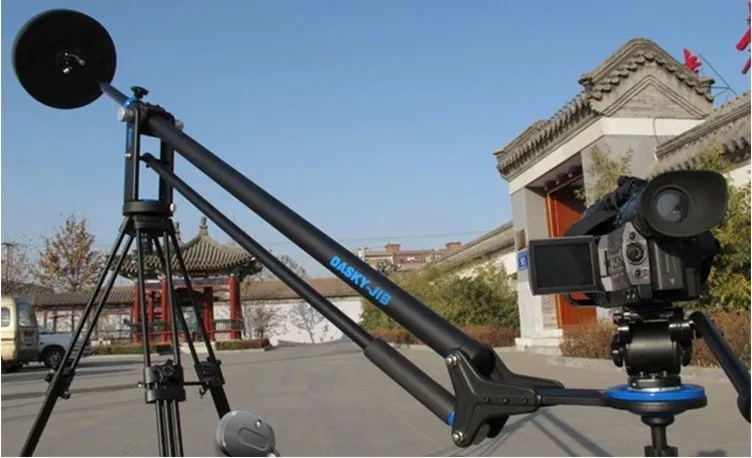
A boom essentially consists of a camera
attached to an arm of varying lengths that can pivot through a fixed point. It is a smaller version of the cranes that
are used for construction. A camera boom is used to get a view of character or subject
from above. These are commonly used in films, and the boom moves up, down, and
around. This
system requires far more setup time because of the multiple pieces of equipment
that must be assembled. So shots requiring boom movement require planning in
advance of your shoot.
9. Floating Stabilizer

Floating stabilizer
is a step up of the dolly movement. You can follow the subject around twists
and turns. The movement of dolly has a limitation, floating stabilizer eliminates
those limitations. The stabilizer is strapped to the cinematographer, and the
camera is mounted to the stabilizer with metal jointed which are controlled by
gyroscopes.
10. Handheld
Using
this technique, the cinematographer simply holds the camera, and moves, however
and wherever he needs to move to get the shot that he wants. when taking
handheld shots you should avoid using the zoom techniques. Zooming while using
the handheld technique will make your shot shaky.
- Jagadish