Showing posts with label Cinematography. Show all posts

Tuesday, 3 October 2017

Basic Camera Angles

Camera Angle


The term camera angle  refers to the way a shot is composed. The relationship between the camera and the object being picturise gives emotional information to an audience, and guides their perception about the character in shot. The more intense the angle, the more symbolic and heavily-loaded the shot.

1. Eye Level


An eye-level angle is the one in which the camera is placed at the subject’s height approximately five to six feet from the ground, so if the actor is looking at the lens, he wouldn’t have to look up or down. Eye-level shots are incredibly common because they are fairly neutral shot. They often have no dramatic power whatsoever, thus they are ideal for romantic comedies and news casting

2. The Bird's-Eye view


The shot is shown from directly above. This is a completely different and very unnatural point of view which can be used for dramatic effect or for showing a different perspective.
In drama it can be used to show the positions and motions of different characters and objects, enabling the viewer to see things the characters can't. This shot does, however, put the audience in a godlike position, looking down on the action.

3. High Angle


A High angle also known as Top Angle, it shows the subject from above but not so extreme as a bird's eye view. High angles make the object photographed seem smaller, it aims to portray the subject as submissive, inferior or weak in some way.

4. Low Angle


Low angles are captured from a camera placed below the actor’s eyes, looking up at them. Low angles  making them appear larger so as to convey them as heroic and giving them the impression of being more powerful or dominant. This is totally opposite to High Angle or Top angle shot.

5. Dutch Tilt Angle
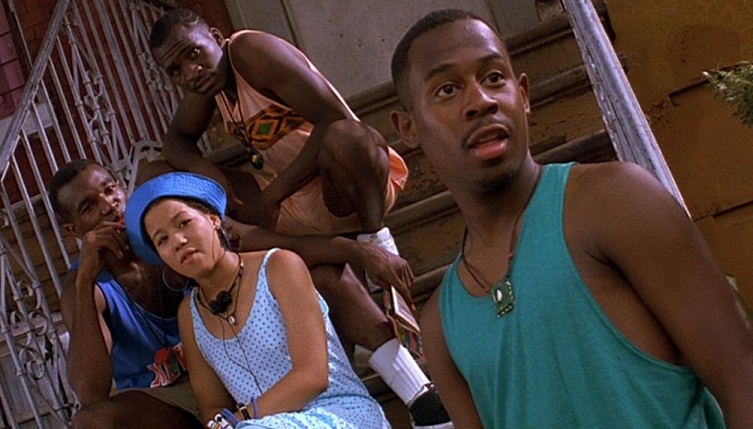


Also called canted or Slanted angle, this is where the camera is purposely tilted to one side so the horizon is on an angle. Dutch Tilt angles can be employed with great artistic effect to disorient and disturb the viewer. It is unusual angle but sometimes camera is tilted to represent imbalance and instability (very popular in horror movies).  This technique is suggest Point of View shots (POV).


- Jagadish

Monday, 2 October 2017

Basic Types of Shots in Film Making and Photography


What is Shot?

In film making and video creation, a shot is a series of frames, that runs for an continuous period of time. Film shots are an important aspect of a movie where angles, transitions and cuts are used to further express feelings, emotions,  ideas and movement.


1.  Extreme Long Shot (ELS)

Extreme Long Shots are used to show the subject from a distance, or the Location in which the scene is taking place. This type of shot is particularly useful for establishing a scene


2. Long Shot (LS)

Long Shots also known as full shot or Wide shot, Long Shots shows the subject from top to bottom, and  usually projected to put the object or person in some relation to the Location.


3. Medium Long shot (MLS)

Medium long shots include a character or characters from approximately the knees up in the frame, It is an Intermediate between Long Shot and Medium Shot. Shows subject from the knees up. These shots are also known as American shots.


4. Medium Shot (MS)

Medium Shot  also referred to as a Semi-Close Shot, a medium shot Usually frames actor from the waist up and  It aims to capture subtle facial expressions combined with their body language or surrounding environment that may be essential to provide context. The medium shot should usually contain all the action of the scene and it should be well matched with the flow of the long shot, so that the editor can cut smoothly at practically any point between them.


5. Medium Close Up Shot (MCU)

Medium Close Up Shot captures between a Medium Shot and a Close Up, typically framing the subject from shoulder up.


6. Close Up Shot (CU)

The close up keeps only the subject or a person’s face full in the frame. It is, without a doubt, the most essential shot type to show dramatic elements, reactions, or emotion.

7. Extreme Close Up  (ECU)

Extreme Close up Shots also known as Macro shot, This shot is traditionally used in films to Emphasizes a small area or detail of the subject, such as the eye or mouth. An Extreme Close Up of just the eyes is sometimes called an Italian Shot


- by Jagadish

Sunday, 1 October 2017

Basic Composition technique for Photography and Cinematography

How to increase the visual interest in the frame?


We will get the step by step answer below for the question


What is Composition?


Composing an image means arranging elements within it in a way that suits the core idea or goal of your work best. Arranging elements can be done by actually moving the objects or subjects. A good example for this case is portrait or still life photography. Street photography involves anticipation, since the photographer doesn’t usually have the choice of moving his subjects himself, but has to wait for them to take the most suitable position within the frame. Another way of arranging elements is by changing your own position. Such a way is appropriate in circumstances that do not allow the photographer to physically move anything, like landscape Photography.

Rule of Thirds


The basic principle behind the rule of thirds is to imagine breaking an image down into thirds (both horizontally and vertically) so that you have 9 parts. Then place your subject in the left or right vertical line and place the subject's eye in the intersection part. photo becomes more balanced and will enable a viewer of the image to interact with it more naturally. The rule of thirds automatically makes you to fix your background location in the horizontal line. 


Head Room

                   
Nothing but the space between the subject's head and top of the frame. Head room is most important for a long shot and mid shot but you need not to follow the head room for close up and Extreme close up shots. But you have to careful about the death space


Lead Room

Lead room also known as Nose room, is nothing but the Space between the subject's face and the edge of the frame.


Final Note:

If you follow the above mentioned rules you will click well composed photographs.

- by Jagadish

Types of Camera Movements

Camera Movement Camera movements are often implemented to add anticipation to shots, their best use is when new information is exp...